
Category Archives: MS Treatments

Myrobalan wins grant to advance MS remyelination candidate MRO-002

multiplesclerosisnewstoday.com/news-posts/2025/03/18/myrobalan-wins-grant-advance-ms-remyelination-candidate-mro-002/

March 18, 2025

Myrobalan Therapeutics has been awarded a grant of more than $850,000 from the National Multiple Sclerosis Society to advance its new oral candidate MRO-002 for treating progressive forms of multiple sclerosis (MS).

The funding was made through the society’s Fast Forward program, which seeks to bridge the gap between preclinical and clinical development for new therapies and diagnostic tools that address disease progression and progressive forms of MS.

Myrobalan‘s experimental therapy MRO-002 is a GPR17 antagonist, or inhibitor, that’s designed to promote myelin repair in people with MS and other demyelinating conditions. With the grant, the company will conduct additional preclinical experiments to determine if it may have therapeutic benefits in progressive MS.

“We are excited to receive the Fast Forward grant from the National MS Society and appreciate their confidence in our drug development approach,” Jing Wang, PhD, CEO and co-founder of Myrobalan, said in a company press release. “We believe that MRO-002 has the potential to promote myelin repair in neurodegenerative diseases, demyelinating disorders, and conditions involving recovery from [central nervous system] injury.”

Recommended Reading
March 10, 2025 News by Marisa Wexler, MS

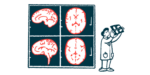
Slowly expanding MS lesions linked to myelin damage in brain

Finding ways to aid myelin repair

In MS, the immune system mistakenly attacks the myelin sheath, a fatty coating around nerve cells. Like an insulator on electrical wires, myelin protects nerve fibers and ensures the efficient transmission of nerve signals. When it’s lost, patients experience a range of symptoms related to disrupted nerve signaling.

Myelin is produced by oligodendrocytes, specialized cells in the brain and spinal cord. While existing oligodendrocytes have some ability to repair damaged myelin or restore lost myelin, the remyelination process isn’t very efficient in MS due to ongoing inflammation. There’s also insufficient maturation of oligodendrocyte precursor cells (OPCs) into fully functional oligodendrocytes that are able to produce myelin.

A key challenge in MS treatment is the repair of damaged myelin. While available disease-modifying therapies help reduce relapses and slow disease progression, their ability to repair myelin and reverse disability is limited.

Finding therapies that can improve remyelination has been a longstanding goal in MS research. One promising approach involves targeting GPR17, a receptor in OPCs that prevents the cells from maturing into fully functional oligodendrocytes, thereby limiting myelin repair.

MRO-002 is a highly selective GPR17 antagonist that can cross the blood-brain barrier, the protective membrane that restricts the passage of most substances from the bloodstream into the brain. This ability lets it reach the brain and remove this brake from OPCs, causing them to mature and boosting the production of new myelin.

Preclinical studies on human-derived oligodendrocytes and animal models of demyelination have shown encouraging results. MRO-002 significantly boosted the maturation of oligodendrocytes in both models, resulting in enhanced remyelination in the brains of the animals.

With support from the National MS Society, the company hopes to conduct additional studies to support MRO-002’s development toward clinical trials.

“Having a therapy that promotes myelin repair would have tremendous implications for people living with MS,” said Walter Kostich, PhD, associate vice president of translational research at the National MS Society. “We are happy to support Myrobalan Therapeutics’ preclinical testing of MRO-002 and look forward to learning whether it has translational potential for people with MS.”

First published by: multiplesclerosisnewstoday.com/news-posts/2025/03/18/myrobalan-wins-grant-advance-ms-remyelination-candidate-mro-002/

March 18, 2025

REMYELIUNATION THERAPY TRIAL

First clinical trial of remyelination therapy PTD802 cleared in the UK

Pheno Therapeutics’ candidate is inhibitor of GPR17 receptor

The U.K.’s Medicines and Healthcare products Regulatory Agency (MHRA) has cleared Pheno Therapeutics to initiate a first-in-human Phase 1 clinical trial to test its oral candidate PTD802 in healthy volunteers.

The therapy is a selective small molecule antagonist, or inhibitor, of the GPR17 receptor and is designed to restore the damaged and lost myelin — a process known as remyelination — in people with multiple sclerosis (MS) and potentially other demyelinating conditions.

“We are delighted to have received approval from the MHRA to progress our PTD802 program to a Phase 1 trial, a major milestone, marking our transition to a clinical stage organization. As the first company to carry out dosing of a selective GPR17 antagonist in healthy humans, we are leading the way in the race to develop GPR17-targeting remyelination therapeutics,” Fraser Murray, PhD, Pheno Therapeutics’ CEO, said in a company press release. “With this first-in-human program we are moving closer to our goal of delivering transformational drugs for the treatment of neurological diseases associated with demyelination.”

MS is caused by the immune system erroneously targeting myelin, a protective layer that surrounds nerve fibers and is important for nerve signals to be efficiently transmitted. As myelin is lost, nerve cells also become damaged and patients experience a range of symptoms related to impaired nerve signaling.

An ‘urgent need’ for remyelination therapies

The search for therapies that promote myelin repair has been a key focus in MS research for many years. There are a number of treatments that reduce inflammation and prevent or slow further damage, but none can reverse the damage that’s already occurred.

“Current treatments for MS focus mainly on the immune aspects of the disease, reducing severity and frequency of relapses. There is an urgent and unmet need for effective therapeutics that limit disability progression in MS, with remyelination offering a promising neuroprotective treatment,” said Siddharthan Chandran, MD, PhD, co-founder of Pheno Therapeutics.

The GPR17 receptor works like a natural brake that slows the development of oligodendrocytes, the cells that produce myelin in the brain and spinal cord. PTD802 is designed to boost remyelination by releasing this brake. Pheno believes it may be used with existing MS therapies to better control disease progression and possibly help patients regain some lost function.

“Whilst GPR17 antagonists have potential utility beyond MS, PTD802 is a hugely promising first-in-class oral remyelination agent, which we believe will be the next step in devising combinatorial approaches to preventing MS progression,” Chandran said.

by Patricia Inacio, PhD | January 21, 2025

Reposted from Multiple Sclerosis News Today

MS and the Holy Grail of MS Neural Repair

A picture of me.

Bill Walker

MS and the Holy Grail of MS Neural Repair

A couple of days ago I got the latest edition of MS Focus Magazine. I found two paragraphs that brought me renewed hope for an effective treatment for MS. They are reprinted below.

Medicine & Research:

Of a slightly different mechanism than the previously mentioned monoclonal antibodies, temelimab targets a specific protein that is believed to have a role in the development of MS. MS is caused in part by increased inflammation in the central nervous system, and the intended mechanism of action for temelimab would be to relieve this inflammation to prevent progression. The medication should work to help fix the damage to the myelin sheath that occurs in MS.

By Ellen Whipple, Pharm.D.

Life with MS:

The Holy Grail of MS care is neural repair. By repairing areas of damaged myelin and axons or rerouting information around areas of damage, the hope is that we may be able to reverse disability. Numerous research projects around the world are focusing on this. It could be that the answer to reversing disability ends up coming from a non-MS field, such as spinal cord injury. Currently, phase II studies are ongoing with a molecule I’m excited about, elezanumab. If this monoclonal antibody does what we hope it will, it should regenerate axons in the brain and spinal cord.

By Dr. Ben Thrower, M.D.

It is this second paragraph that excites me the most. If it works, you would still have MS. But the chances are you wouldn’t experience any, or at least not as sever, symptoms as many of us currently suffer from. There is hope on the horizon!

Don’t Let Back Pain Disrupt Your Sleep

Girl stretching on mat

Picture by: Pixabay


Don’t Let Back Pain Disrupt Your Sleep

After a long day and an aching back, nothing sounds better than falling into bed and drifting off to sleep. Unfortunately, if you are a back pain sufferer, sleep might not provide the sweet relief you are looking for. The pain continues, you can’t get comfortable, and it ends up being a painful night of tossing and turning. While there isn’t a cure for your back pain, there are a few ways to take some of the pressure off so that you can escape to dreamland.

Strengthen Your Core

When pain is involved, exercise is likely the last thing you want to do, but strengthening your core could help alleviate some of that pain. According to physical therapist Sean Kinsman, “When the muscles that surround and help stabilize the spine aren’t strong enough to properly function, other structures have to pick up the slack,” which results in stress on your back and the resulting pain. A strong core can take the pressure off and give you some relief. There are several easy exercises you can perform from the comfort of home such as the bird dog, dead bug, or seated hip switches. You might also try some gentle stretching before bed as well to loosen up tight muscles and relax both your mind and body.

Eat Right for Healthy Joints

Have you ever stopped and truly thought about how important food is to your overall health? The food you put in your body has a direct impact on every system in your body, including bone and joint health. Some foods in particular rise above the others as far as their ability to promote healthy joints. Cruciferous vegetables such as broccoli, cauliflower, and kale help your bones absorb calcium. Broccoli even takes its superpowers a step further with sulforaphane, a bio-active compound that can help prevent joint pain. Other super foods to add to your diet include ginger, bone broth, and fruits that are rich in vitamin C such as pineapples, strawberries, and mangoes.

Change Your Sleep Position

We all have that one sleep position in which we feel the most comfortable, but there are a few changes you can make to reduce pain. Side sleepers should keep knees bent, put a pillow between their legs to align their spine, and switch sides periodically. If you are a back sleeper, put a pillow under your knees and a rolled-up towel under the small of your back to mimic your back’s natural curve. Sleeping on your stomach isn’t recommended due to its lack of support, but if you must, put a pillow under your abdomen and try going without the head pillow to avoid straining your neck.

Shop for a New Mattress and Pillow

Both your mattress and your pillow could be exacerbating your pain rather than relieving it. The proper mattress for ultimate spinal support will be the perfect firmness (medium-firm), which can be achieved with memory foam, latex foam, or an innerspring. All options conform to your body’s natural shape, so it comes down to a matter of comfort, preference, and budget. When you shop around for a new mattress, make sure you try it out on each side as well as your back, and ask about the return policy.

You might also consider investing in a new pillow that helps align your spine, support your head and neck, and reduce pressure points. Back and stomach sleepers will benefit from a thin pillow with a little lift at the bottom to support the head. Side sleeps should opt for a firm pillow with a gusset to add thickness. No matter what you choose, don’t let your purchases go to waste by getting out of bed the wrong way and twisting your back. Instead of popping out of bed and risking even more pain, roll on your side and push yourself up.

Millions of people have back pain, and as one of them, you know the effects it has on your sleep. Don’t lie there in pain. Instead of just reading the above tips, put them into action today!

by,

Cheryl Conklin

MS PAIN AND ICING DOWN THE SPINAL COLUMN

MS PAIN AND ICING DOWN THE SPINAL COLUMN

A picture of me.

Bill Walker

 I need to start by saying that I am not advocating that anyone do what I did and, in fact, still do. I’m only telling you my story of what I did quite frequently especially early on in my first initial attacks. And yes, it did and still does, help quite a bit if my pain becomes too intense.

     My first major attack was downright brutal. My legs locked up to the point where I was walking like I was standing on stilts. And my feet burned made even worse by the

hundreds of needle like pricks that I felt with every step I took. But the worst pain was in my sciatic nerves running up and down both my right and left legs. And it didn’t take long for this nearly intolerable pain to move up into my lower back making every bend and twist an agonizing experience.

     And it wasn’t long after these first symptoms that my MS moved into my hands causing my fingers to curl up to the point where I could barely get my hand to open. And finally came the flashing in my eyes and the dizzy spells that more than once sent me to my knees on the floor.

     And these were just the physical symptoms. I also had to deal with the fear of being attacked by something that even my doctor was totally perplexed about. Oh, and did I mention that I was between jobs and had absolutely no insurance at the time?

     In the beginning my doctor put me on 800 mg of Ibuprofen every six hours. And I’m sure the fact that did absolutely nothing won’t come as a surprise to any of you who also have multiple sclerosis. And since I didn’t have insurance and couldn’t really afford to see a neurologist right away I was left with only one solution that I felt might bring some relief. I went to a hardware store and purchased several of the blue icy packs that you freeze and put into coolers to keep food and drinks cold when traveling or going camping. 

     As soon as they were frozen I started laying on them with one or two of them positioned along my lower back for literally hours at a time. And thankfully it started to relieve my pain almost immediately. And then after a few days I noticed that both my legs and my hands began to loosen up to the point where I could stand and walk almost normally again and stretch my fingers to their fullest extension.

     I kept this up for weeks as the attack slowly subsided overall. At one point I had my spinal column so cold I could feel my nervous system rattle inside my body. This was a very strange experience because I could feel my nerves buzzing inside my brain.

     Fortunately after my initial attack I have never had one that severe again but I still used ice for years after this whenever I had an exacerbation with intense pain. And every time I did it my pain subsided to a point where it was at least tolerable. And I still do this though not anywhere near as much as I used too.

     The surprising thing about this over all of these years, is that none of my neurologists have ever said not to do this, though they’ve never really said that it was a great idea either. The two things that I will add here is that it’s cheap and it’s drug free which you can’t say about most other MS treatments on the market!

By Bill Walker


REQUEST FOR SPECIAL PET STORIES

I’m requesting stories from any and all of you who have ever had a pet die and than return in any way to let you know that they survived death and came back to ease your fears about their crossing. I think I’m going to write a book about pets surviving death as I have had like at least three of my pets return after death to comfort me after their transition.

What I would like for you to do is to first write the experience you had out in long hand and put it down for a day, or a little while, and then type it out and send it to me at the email address below. If and when I write the book I will certainly let everyone know especially if their story made it into the book. This is kind of a nonscientific study that I am undertaking so I would love to hear from you all if you’ve got a story to tell. The reason for having you write it out twice is that usually after you write something once and wait a little bit your mind starts to recall the experience and you often remember more than you did in your first draft. And I want the stories to be as in-depth as they possibly can be.

Please send your stories to: wc.walker@yahoo.com

Thank you in advance. And please ask around family and friends to see if they have stories to contribute. Please put, Pets surviving Death, in the subject box!

MS Pain, Inflammation, and Non-Alcoholic Beer

A picture of me.

Bill Walker

MS Inflammation and Non-Alcoholic Beer

The 2018 Olympics are now just about over and it appears that Germany will come in second or third with the total medal count at these winter games. In the overall scheme of things that isn’t all that surprising. However, one reason that the German trainers are attributing this too is kind of a surprise.

     We all know that Germany is considered the beer capital of the world. But it appears that it is not just the work ethic of the German Olympic team that is helping them on to victory. German trainers and the teams Olympic Doctors are also attributing the team’s success to non-alcoholic beer.

     It should come as a no brainer that drinking regular alcoholic beer isn’t the best way to train for the Olympics so trainers a few years back started letting their athletes drink non-alcoholic beer while training instead of forcing them to be completely beer free.

     Over a short period of time the trainers and doctors began to notice that their athletes were recovering from injuries in a far shorter period of time than they had previously. And of course this made everyone wonder why?

     Through a process of elimination they began to suspect that maybe it had something to do with the non-alcoholic beer that these Olympians were now drinking so they decided to study it. And low and behold they discovered that the reason these athletes were recovering so quickly was because non-alcoholic beer has a powerful anti-inflammatory effect throughout the body. Which naturally accelerated the body’s ability to heal after most injuries.

     In the article I read they did not specify what exactly it was in non-alcoholic beer that was responsible, nor did this article say whether regular beer also has this same effect. But really, who cares.

     So don’t feel bad if you have the urge to go grab a six pack of non-alcoholic beer and let lose.

     This one’s for you multiple sclerosis!    

Bill Walker   

MS and Stem Cell Particles

A picture of me.

Bill Walker                                                                   

This is a reprint from a recent study:

Dr. Metcalfe, who is based at Cambridge University in England, is currently looking for funding to further develop her theory that using a stem cell particle called a LIF would switch off the body’s auto-immune cells and help repair the brain.

In addition to being able to switch off the body’s autoimmune response, LIF also protects the brain and spinal cord — the areas affected by multiple sclerosis — and aids in repairing tissue, including brain tissue.

The research has not been smooth sailing. Metcalfe has found that LIF cannot survive outside the cell for more than 20 minutes before being broken down by the body, making it difficult to use as a therapy. However, she has found that nanoparticles could be the answer to the problem, as they can be used to help deliver the LIF therapy. By using antibodies with the nanoparticles, the therapy can be directed to certain areas of the brain — helping to repair damage caused by multiple sclerosis.

Metcalfe is now looking for research funding and hopes that one of the big pharmaceutical companies will step in. She hopes to begin clinical trials of the therapy by 2020.

MS and Reducing Summer Car Heat

A picture of me.

Bill Walker

We all know that summer heat and humidity are absolutely brutal on people with multiple sclerosis. And escaping it is almost impossible to do. But one area where everyone, ms or not dreads is getting into a car that has been sunbathing for a few hours and the internal temperature is usually somewhere in the 120 degree range.

There is a somewhat easy choice to reduce some of that direct sunlight. You’ve probably already seen them and perhaps laughed at some of the more goofy ones. If you’ve ever wondered if those car screens in the front window, and occasionally in the back as well, work? They do, and are very effective in keeping your car from becoming a roaster oven.

You can buy these screens at Walmart and other similar stores. And also keep your windows cracked open just enough to let any heat that may build up to escape. You can also invest in solar powered window fans that run off the power of the sun while your not in the car keeping the air moving so the heat moves out any cracked windows.

Try to stay cool and have a great summer everybody!

Bill Walker

Do you know a literary agent or book publisher that would be willing to read my book? If so please email me and let me know. 

MS Turmeric and Inflammation

A picture of me.

That would be me!

     Turmeric is derived from the spice curry used extensively in India. It’s health benefits range from helping to treat constipation to also being a huge anti-inflammatory agent. I personally had read so many great things about turmeric , including that some people believed it have something to do with India’s very small incidence of Multiple Sclerosis, that I just had to give it a try. 

     That was over a year ago and unfortunately I did not experience the health benefits that I had hoped to achieve. I am certainly not saying that it doesn’t provide benefits to other people but it doesn’t seem to do much for me except cost money. It may come down to each persons own body chemistry being a factor in whether turmeric has a positive effect or not. I know that researchers are discovering that many cancer drugs can work wonders for some people and have absolutely little if any effect for others.

     In closing, if it works for you, by all means keep using it as long as your neurologist and general practitioner are aware of you using it as many supplements like turmeric can have undesirable effects when used with other prescribed drugs!   

by

Bill Walker


PS. I am still in search of a literary agent/publisher for my book if anyone can help by putting in a good word for me!

MS and Pain Relief Using Lidocaine Creams

    Small bottle aspercreme lotion! Multiple Sclerosis is a disease that is often accompanied by varying amounts of pain both muscle, through inactivity, and more often nerve pain because that is the nature of this awful disease. I’ve used all kinds of pain relief medications such as pills that often leave you with brain fog as well as having to deal with a whole host of other unsavory side effects including addiction and even death. I’ve also tried several kinds of pain lotions that do in fact seem to help a little but they are messy and difficult to apply to the point where even what relief they do provide seems almost not worth the bother.

     Recently though I saw a commercial for a new aspercreme rub with 4% lidocaine added for additional pain relief beyond its other active ingredients. I was intrigued enough to go out and spend eight dollars on a 2.7 oz bottle to see if it actually worked? And surprise, surprise, it worked like a charm. I have not found any product, pill or otherwise, that reduced my pain in a matter of minutes like this product does.

     At times I suffer from extreme lower back pain as well as sciatic nerve pain in the upper portions of both my legs and I almost can’t believe the amount of relief I get after just a few minutes from the time of application of this lotion. I’m sure that there are probably some side effects of over use of these products but I’m also pretty certain that they can’t be any worse then what most doctors prescribe for pain when it comes to MS.

     Give it a try. If it doesn’t help, all you lose is a few dollars. Let me know if you try this and what your thoughts are!


Bill Walker